Is It Worth It? 4 Questions to Ask Before Any Skin Treatment

Consultations at Relevé are relaxed and free of charge.
Every week, someone asks me whether the tool or product they saw an influencer raving about is real or snake oil. Not everything is snake oil, but not everything will be worth it for you. In the next episode of my podcast, I’m breaking down the research on some trending at-home treatments like estrogen face creams and microneedling rollers. I can't cover every option out there, though, so today I'm sharing a simple framework for deciding whether any treatment, at home or in office, is right for you.
The framework involves answering each of four questions, and then weighing each in order of importance to you. The questions are: What is the goal? How much will it actually help? What is the cost? And, what are the risks?
The 4 Questions
What is the goal?
I think a lot of people use devices and products at home because someone told them they were “good,” but they don’t really know what the device is trying to treat, or if it aligns with their personal goals for improvement. I hear about this a lot during consultations with new patients who say, “my friend got Botox and she loved it,” when their main concern is best treated with filler. You may need professional help answering this question, but you must define your own goals for your skin and then find a treatment that will address them.
Often, patients can’t put into words what is bothering them or what their goal is. They just want to feel “better.” This is a completely reasonable place to be, and throwing the kitchen sink at it probably won’t help. This is honestly my favorite part of a consult: helping you name what's bothering you, based on how faces actually age, and figuring out what would make the biggest difference.
And don’t be fooled–how you feel when you look in the mirror is actually way more important than any one line or shadow. None of us are perfect or even want to look perfect. We just want to feel confident.
How much will it actually help?
This can be a tricky one and you might not know before you try. Matching your expectations with what is realistic for a treatment is the most important factor determining how satisfied you are.
If I promise facelift-level results from a treatment and don’t deliver you’re going to be disappointed and maybe even mad. But if I clearly describe what kind of benefit you can reasonably expect, you’re able to make an informed decision and might be completely satisfied with the exact same treatment.
In my (not-so-humble) opinion, most at-home treatments are not going to move the needle much. That doesn’t mean they’re snake oil, but for me personally, it wouldn’t be worth the investment in money or time. I like to keep things simple and sustainable at home, and then use targeted in-office treatments for my main concerns.
Overpromising is the biggest problem with most marketing you see on social media. They make BIG promises and simply can’t deliver. Their before-and-afters are shot in completely different lighting, and the paid influencers swear it was a game-changer (eyeroll).
What is the cost?
Financial cost is the obvious question, but I don’t just mean financial cost. Of course, the financial cost is an important factor and what’s “worth it” to one person might be “crazy town” to another. You should identify whether you feel the cost is high or low based on your own scale.
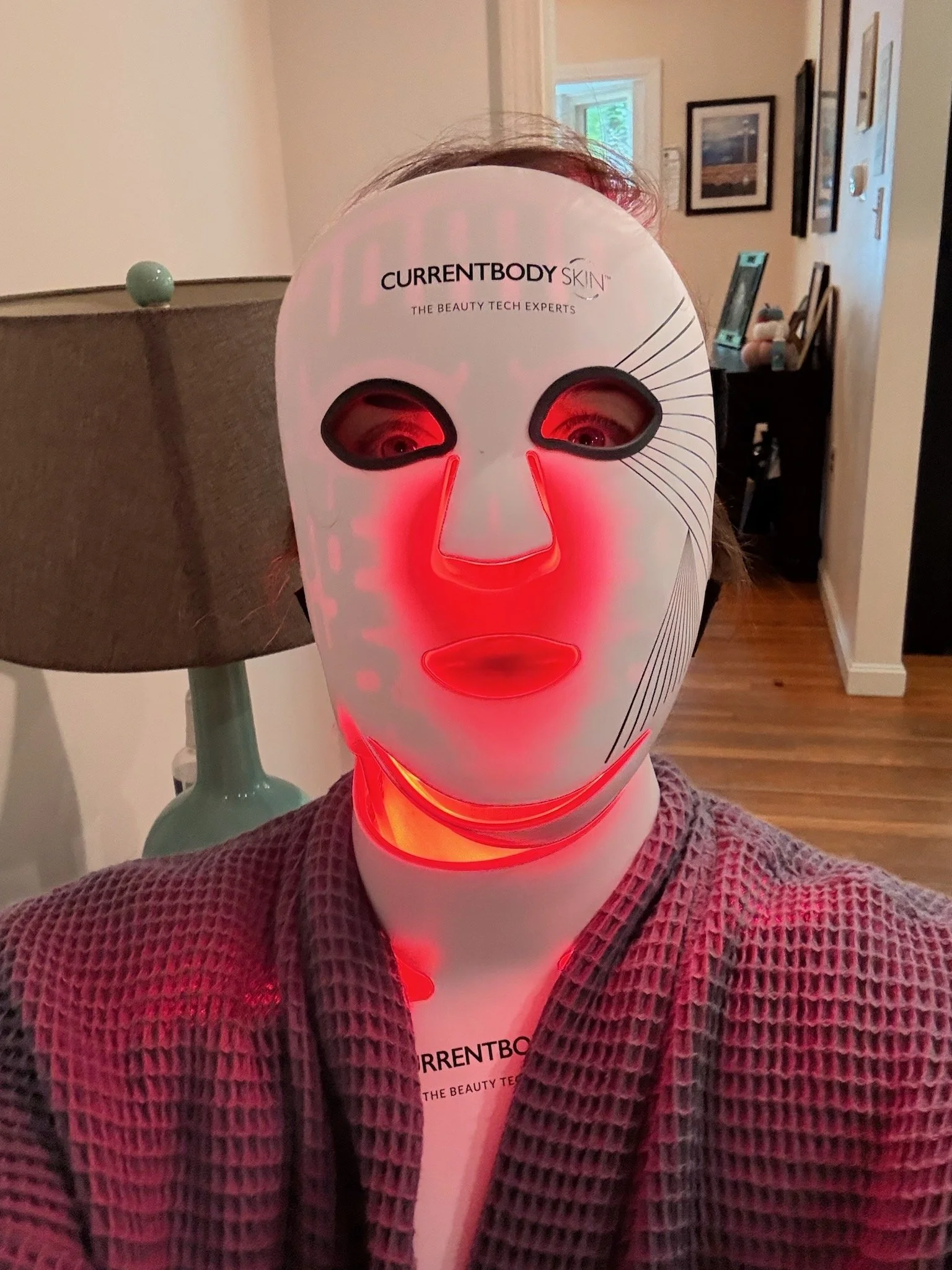
In addition to the financial cost, what other investments will be required of a treatment? For example, red light therapy masks require regular sessions multiple times per week. The cost might be your time, your consistency (does it work even if you take a week off for vacation?), and your healing period or “down time.”
What are the risks?
All treatments, either at home or in an office, carry risk. Arnica cream, for example, has a small chance of causing a rash due to allergy. Microneedling rollers carry risk for infection and scarring. It can be tough to know the risks of at-home treatments, because marketers don’t tend to put them in the commercial, but you can ask your provider for insight into hidden risks.
Providers are required to describe to you the risks of any in-office treatments, although I’ve had many patients tell me I’m the first person who’s ever told them what the risks of Botox are. Please don’t get treatment without understanding the risks and fully consenting to them.
Are red light masks worth it? A real example
Let’s walk through the framework to determine whether we want to buy a red light therapy mask.
What’s the goal? I’m 42, and starting to notice fine lines around my eyes. I want to minimize those and reduce brown spots. Red light therapy won’t reduce my brown spots, and the evidence for fine lines is modest.
To what degree? In a study on an Omnilux brand mask made for in-office use (*see footnote for reference), 59% of users saw benefits. For me, that’s a pretty low number if the other 41% didn’t see any change. Plus, at-home products may have an even lower effectiveness.
What does it cost? The basic Omnilux costs $395. I’ll need to use it for 10 minutes three to five times per week. (I know myself and I wouldn’t keep up with that time commitment, but some women love their red-light mask time and feel that it helps them wind down at the end of the day. To each her own!)
What are the risks? Red light masks are pretty safe. Some people get headaches or feel sleepy afterward, but there are no major side effects.
Where do you go from here?
On balance, the investment of time and money wouldn’t be worth it for me to buy a red light mask. But again, to each her own! These are the questions I’ll walk you through during your consultation at my office. If you’re considering Botox, filler, laser, weight loss meds, or anything else (even if I don’t offer it myself) we can discuss this framework. My goal is that you feel empowered to make the right choices for you.
Click here to book a free consult at my Amherst, New Hampshire office.
*Bhat J, Birch J, Whitehurst C, Lanigan SW. A single-blinded randomised controlled study to determine the efficacy of Omnilux Revive facial treatment in skin rejuvenation. Lasers Med Sci. 2005;20(1):6-10. doi: 10.1007/s10103-005-0330-5. Epub 2005 May 21. PMID: 15909229.
Want more deep thoughts by Jen O’Brien? Check out these posts…
What actually works in skincare (and what’s snake oil)
